Workshop - Workplace loneliness in a workplace community
Tietoa tästä työpajasta
Kesto
- 2 tuntia
Tavoite
- Osallistuja ymmärtää yksinäisyyden ilmiötä ja löytää keinoja sen vähentämiseen
Kenelle
- Työyhteisöt, tiimit
Työpajan tarvikkeet
- Isot post-it-laput (A5koko)
- Teippi
- Eriväriset tussit ja kynät
- Halutessasi myös PowerPoint-esitys, jossa työpajan ohjeet
Nettisivulta tulostettavat materiaalit
- Työntekijätarinat
- “Onnistunut työpäivä” -keskustelukysymykset
- Tulosta tarvittaessa tämä nettisivu itsellesi ohjeeksi.
Työpajan kuvaus
Työpaja tarjoaa konkreettisia keinoja rakentaa osallistavampaa ja myötätuntoisempaa työarkea erityisesti nuorten ja uusien työntekijöiden näkökulmasta.
Ilmiötyöpajan tarkoituksena on pysähtyä olemassa olevan tiedon, merkitysten ja kokemusten äärelle. On lupa olla ei-tietämätön ja etsiä tietoa työkavereilta, sekä oivaltaa yhdessä.
Tarkoituksena ei ole pelkästään ideointi vaan toisten kokemusten kuuntelu ja vastaanottaminen.
Työpajassa kiinnitetään erityistä huomiota nuorten ja uusien työntekijöiden kokemuksiin, koska tutkimusten mukaan he kokevat työyksinäisyyttä muita enemmän.
Mitä työyhteisö voi saada tästä työpajasta?
Tämä työpaja tarjoaa työyhteisölle mahdollisuuden
- tiedostaa työyksinäisyyden ilmiönä
- lisätä ymmärrystä työyksinäisyyden kokemuksista eri näkökulmista
- vahvistaa vuorovaikutusta ja empatiaa työyhteisön jäsenten välillä
- tunnistaa käytäntöjä ja asenteita, jotka voivat tahattomasti ylläpitää ulkopuolisuuden kokemusta
- luoda konkreettisia ideoita ja pieniä kokeiluja, joilla lisätään yhteenkuuluvuuden tunnetta
- tukea hyvinvointia ja sitoutumista työpaikkaan.
Duration
- 2 hours
Goal
- The participant understands the phenomenon of loneliness and finds ways to reduce it
For whom
- Work communities, teams
Workshop supplies
- Big PostIt-tags (size A5)
- Tape
- Markers and pens in different colors
- Optional: PowerPoint presentation with workshop instructions
Printable materials
- Employee stories
- Workshop instruction sheet
- “Successful Workday” discussion questions
Materiaalit
Workshop description
Työntekijätarinat
Voit katso työntekijä tarinat tästä tai tulostaa pdf-tiedostot alta.
The structure of the workshop
Preparations
- Print all the materials listed above: make sure there are enough for all participants.
- Load the PowerPoint presentation onto the computer and test that it opens without issues.
- Set up the workshop space with supplies: place Post-it notes, markers, and pens on the tables. Keep tape and extra Post-it notes handy.
- Check that the room has a working screen/projector for the presentation and that audio and internet connections work as needed.
- Write the following words on separate Post-it notes in different colors: Loneliness, Work, Workplace Loneliness. Attach these notes to the wall, leaving plenty of empty space around each. Participants will later attach their own Post-it notes in these spaces.
1. Before the workshop begins (5 min)
- Introduce the workshop’s goal and structure. You can use a prepared introduction on workplace loneliness to set the tone.
- Emphasize that experiences of loneliness at work can happen to anyone, but it is especially common among young employees.
2. Group division (10 min)
- Divide participants into groups randomly (for example “divide into groups of four”) ensuring that close colleagues are not in the same group.
- If participants don’t know each other, ask them to do a quick introduction round where everyone shares their name. Then, their task is to find one connecting factor in the group (such as hobby, interests, holidays etc...). The connecting factor cannot be gender, job role, or workplace.
- Groups present their connecting factor to everyone.
- Each group selects a recorder to take notes on the group’s discussions.
3. Getting into the topic (15 min + 5 min debrief)
- Ask each participant to take three (or more) Post-it notes.
- Use three different colors, one for each theme: Loneliness, Work, Workplace Loneliness.
- Instruct participants to write words or thoughts that come to mind for each theme on separate notes.
One theme per note = three notes for three themes. - Clarify that all “Loneliness” notes, “Work” notes, and “Workplace Loneliness” notes should be the same color for easy identification later when attaching them to the wall.
- When ready, instruct participants to attach their notes around the corresponding word on the wall.
- Give them a moment to look at the words and ideas collected on the wall. Encourage them to read each other’s notes. Participants can walk around to view the notes.
Then move to group discussion. Participants can refer to the wall notes and reflect:
- “What thoughts came up?”
- “What resonated with you?”
- “Did you encounter any new perspectives?”
- “What will you take from this to your own work/team/colleagues?”
4. Group discussion phase (20 min + 5 min debrief)
The recorder writes down the discussion and reads one question at a time to the group:
- What do you think employers/supervisors/colleagues need to understand about (young people’s experience of) loneliness at work?
Present the employee stories. Then groups should choose which story they want to use as a basis for the task.
- In what situations might the characters in the stories experience loneliness at work?
- What words or expressions might they use to describe their feelings of loneliness to others?
Break (5 min)
5. Instruct each group’s recorder to read this text about beliefs aloud:
“In prolonged experiences of loneliness, the way that one thinks about oneself and others can change in ways that make it harder to connect with people later on. "Beliefs" can be defined as deeply rooted thoughts we consider true without questioning.”
Examples of beliefs such as these could be:
- “Other people think I’m boring, so there’s no point trying to get to know them.”
- “Why share anything about myself when no one will understand me anyway?”
- “Other people never talk about anything that interests me.”
- “If I tell my colleagues about myself, they’ll think I’m weird.”
- “I can’t possibly have anything in common with an older colleague.”
- “I’ll be seen as a nuisance if I join in my workmates during their coffee break.”
- “I'll look incompetent if I ask my supervisor for help.”
What other beliefs might the characters in the stories have that make it hard to get to know new colleagues?
6. Successful Workday (approx. 20 min)
Write a story as a group about a chosen character’s successful workday. Then discuss it in small groups using these questions:
“How does the character experience success at work? What makes them feel proud and competent after a workday?”
“How does the character respond to help received at work? In what situations have they asked for help from a supervisor or colleagues? How do they feel about asking for help?”
“How does support from the work community affect the character’s sense of success? How does interaction with colleagues influence their performance and self-esteem?”
“How does a successful workday affect the character’s feelings of loneliness and exclusion? Does it reduce these feelings and improve their relationship with the workplace and others?”
- Write a story as a group about the chosen character’s successful workday.
- Use larger Post-it notes or flip chart paper. The story doesn’t need to be long—it can be single sentences or words. The key is that it conveys the character’s experience of success.
7. Closing: How will the workshop results be used? (10 min)
Review together:
- “How do you feel? How did the work feel?”
- “What was surprising or touching?”
- “What new insights did we gain?”
- “How could these insights be applied in your own work community?”
Agree on next steps:
- “Which idea should we try in practice?”
- “Who will take the lead in implementing the idea?”
- “When will we revisit this topic? Was the trial successful? What experiences do employees have?”
The goal is for the workshop not to remain an isolated moment but to lead to small actions that strengthen belonging and reduce workplace loneliness.
Thank participants: Thank you for participating and sharing your thoughts! Everyone’s contribution is important in building community.
You may also be interested in:
How MentalHub.fi can help
Symptom scales
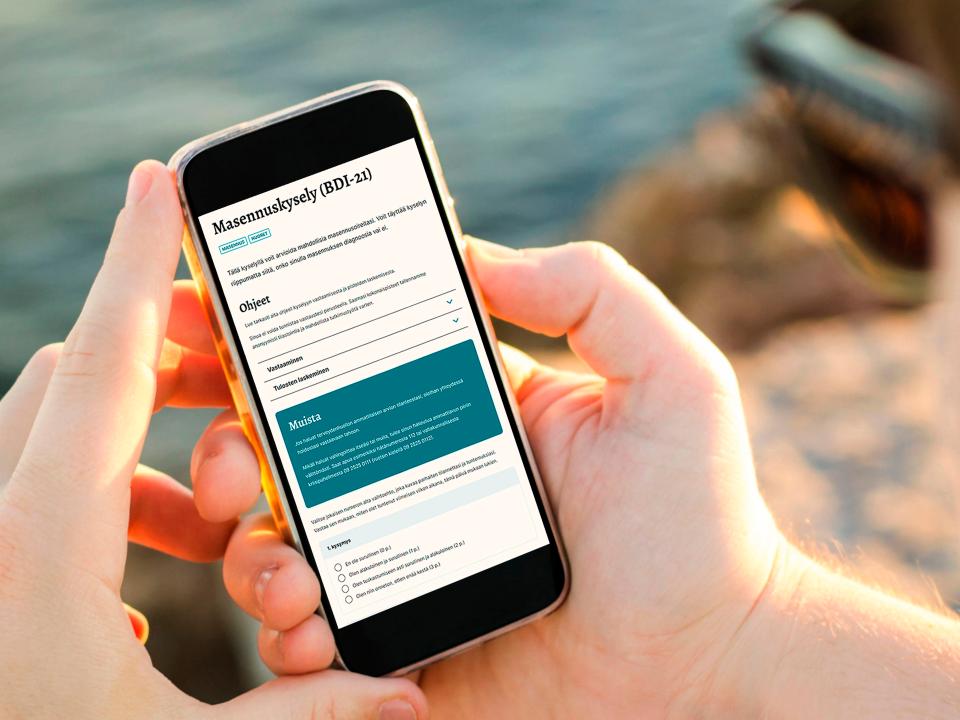
With a symptom scale, you can assess the severity of your symptoms. You will also get tips from the results on what you should do next.
Self-help programs
Self-help programs help you improve your well-being when you are concerned about your mental health or have mild symptoms. The programs include information and exercises.

Internet Therapies
Mainly for ages 16 and up. You need a referral and online banking credentials.
Internet therapy is based on independent work online. A therapist specialized in your symptoms provides feedback on your exercises and answers any questions. You need a doctor’s referral for internet therapy.