Social health in the early intervention model
Summary
- It is the supervisor's responsibility to take into account social health in the early intervention model process.
- The model provides a structure for discussion in which the employee’s experience is acknowledged by the supervisor and the employee receives proactive support to help improve their well-being at work.
- The goal of these discussions is to support the employee’s social well-being and work ability, strengthen a sense of community and inclusion in the workplace, while promoinge early identification and offering timely support.
- Regular conversations about social strain, coping, and recovery help prevent loneliness and support the well-being of the entire work community.
On this page, you will find tips for supporting social health in addition to the tool.
Including social health in the organization’s early intervention model supports social well-being, prevents loneliness, and strengthens a sense of community in the workplace.
The Social Health Early Intervention Model Process
Contents of the Social Health Early Intervention Model:
- Showing an interest in the social health of an employee
- Agreeing on a time for an early support discussion
- Finding solutions together
- Providing social support
- Promoting access to occupational health services
Showing an Interest in the Social Health of an Employee
The supervisor conducts early intervention discussions one-on-one with the employee.
well-being in the context of being a member of the community
A starting point to a discussion could be to ask how much the employee's overall well-being is related to being an accepted member of the workplace community. Occupational health services could alternatively raise the issue.
Open communication and interest in the employee’s experiences at work helps to identify potential concerns early on.
Questions you can ask include:
- “How do you experience your social relationships with colleagues?”
- “Who can you turn to when you need help?”
- “Do you generally feel seen or heard in the workplace community?”
- “Do you feel appreciated for the work you do at work?”
- “Do you experience any loneliness at work?”
If the employee says that they feel lonely, you can continue with:
- “How does workplace loneliness affect your well-being and coping?”
- “What do you think causes your experience of loneliness at work?”
- “As your supervisor/occupational health professional can I help in anyway?”
- “What would help you at work or in your team to reduce loneliness?”
You can also map the employee’s social network at work and their satisfaction with social relationships and their functionality. For example:
- “Would you like more social contacts at work?”
- “How close do you feel your workplace relationships are?”
- “Do you have someone to turn to when you need help, or does anyone turn to you?”
Note that an employee may experience emotional loneliness even if they have many social contacts at work.
Agreeing on a Time for Early Support Discussion
It is a good idea to arrange early support discussions as soon as an employee's social well-being or work ability gives cause for concern. The situation can be examined more broadly: are the challenges related to working conditions, job description, skills, motivation, health, or workplace relationships (taking into account on-site, remote, and hybrid work)?
Example questions:
- “How are you doing? How are you coping?”
- “How would you describe the social relationships at your workplace?”
- “Do you feel like you are part of the work community/work team?”
- “What kind of support would you need from your supervisor or work team in your situation?”
Finding Solutions Together
The aim of early intervention discussions is not only to listen, but also to work together to find concrete solutions that are suitable for the employee in order to maintain their working ability. At the same time, the supervisor supports the employee's social health. They can consider alternative solutions from the perspective of the work community and the team if the employee's reduced work ability is due to team dynamics or social health factors.
Examples of solutions to reduce workplace loneliness:
- Increase contact with the employees at the individual or team level.
- Enable teamwork to be done in tasks usually done independently.
- Increase the amount of onsite work.
- Create opportunities for informal encounters and shared activities among employees.
- Build social interactions into daily work by scheduling shared break times or putting a weekly coffee catch-up into calendars so that everyone has an equal opportunity to attend.
- Discuss with occupational health or guide to other support services.
- Address any social exclusion or bullying if it occurs.
- Make shared social practices visible to the entire team and include them in onboarding materials (e.g., through a Room board exercise).
Providing Social Support
It is a good idea to arrange a follow-up meeting immediately after the discussion. This shows genuine interest and creates a sense of psychological security for the employee. Consistent behavior on the part of the supervisor is important, as it fosters positive interactions with and between employees.
In the follow-up discussion:
- Assess the current situation together.
- Reflect on how the agreed actions have worked or not worked, and what else could be tried.
- Propose using occupational health support if needed.
It can be difficult for a supervisor to discuss an employee's feelings and problems. Therefore, it is important for supervisors to be aware of their own limits and seek support, for example, from work supervision, if necessary.
Promoting Access to Occupational Health Services
Occupational health expertise can be used when the discussion reveals that social health issues are directly affecting the employee’s work or working abilities. The employee has the right to seek help, and the supervisors have an obligation to refer employees to occupational health care for the assessment and promotion of their working ability.
Towards a Socially Sustainable Working Life
It is important to discuss social strain, coping, and recovery regularly throughout the year. Early intervention is not just for special situations.
Everyone in the workplace should have the opportunity to be heard and to be seen. Then everything, including social health, can be discussed openly and naturally.
Supervisors can also talk about social health in the workplace in general terms during shared coffee breaks.
Tips for frontline workers to support their own social health
- Be genuinely present and interested. Actively listen to the employee and show that their experience matters. Just showing interest and empathy can reduce feelings of loneliness.
- Notice the positives and talk about the work community regularly. Don’t wait for problems to turn up—make social well-being a natural part of development discussions, team meetings, and everyday interactions.
- Create opportunities for connection. Ensure that all employees have an equal chance to join communal activities such as team coffee meetings, shared breaks or group feedback sessions.
- Recognize situations and respond early. If you notice withdrawal, reduced participation, or changes in behavior in an employee, bring up the issue in an open and respectful way.
- Support interaction within the team. Develop communication and interaction habits together. Strengthen an atmosphere where everyone feels safe to share thoughts and feelings without fear of crticism or judgment. Take action as soon as possible.
- Take care of your own well-being. As a supervisor, you play a key role in building community. Use supervision or coaching support for yourself if a situation feels overwhelming to you.
- Remember to reinforce feedback. Highlight employees’ strengths and successes as community members: “I appreciate how you considered others” or “You’re a vital part of the team.”
- Use occupational healthcare and other support services. If the employee’s situation affects work ability, refer them to occupational healthcare. Encourage them to seek other easily accessible support services for loneliness.
Read more
This content is part of the inclusive tools for a caring workplace. Find out more about our community engagement tools here:
You may also be interested in:
When and where to get help?
Professional help
Professional help may be necessary when your own resources, self-help exercises and support from family and friends are not enough. A professional will listen and support you. The goal with professional help is to find new perspectives and ways to deal with a difficult situation.
You can seek help, for example, from
- occupational health services
- social and healthcare services in your wellbeing region (e.g., healthcare center)
How MentalHub.fi can help
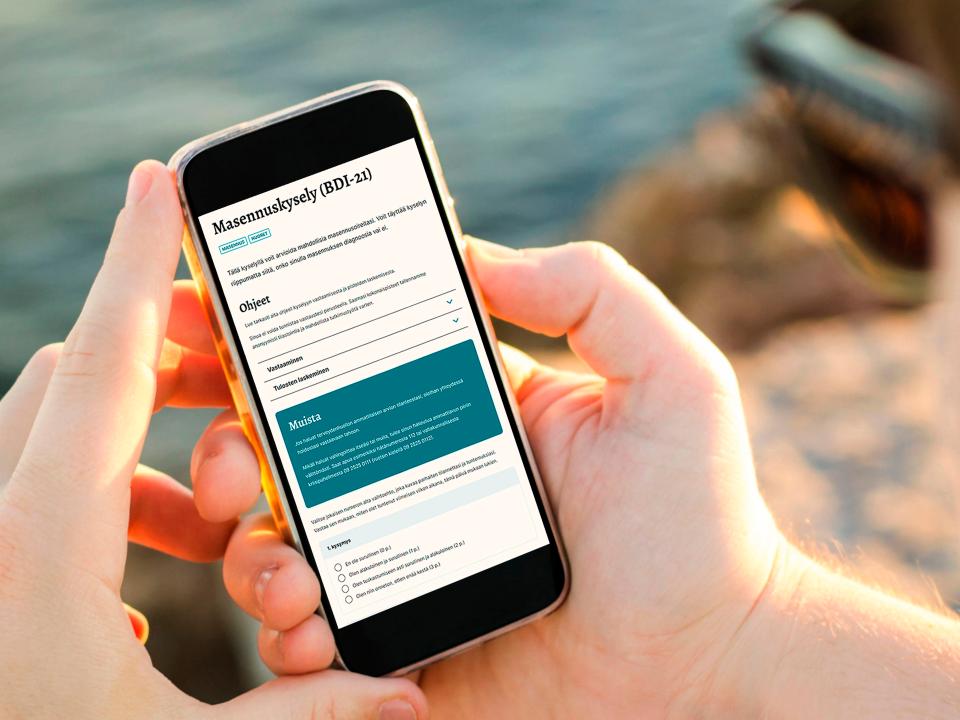
Symptom scales
With a symptom scale, you can assess the severity of your symptoms. You will also get tips from the results on what you should do next.
Self-help programs
Self-help programs help you improve your well-being when you are concerned about your mental health or have mild symptoms. The programs include information and exercises.

Internet Therapies
Mainly for ages 16 and up. You need a referral and online banking credentials.
Internet therapy is based on independent work online. A therapist specialized in your symptoms provides feedback on your exercises and answers questions that arise during them. You need a doctor’s referral for internet therapy.