The Caring Workplace tool helps combat loneliness at work
Summary
- Co-working skills are skills that can be learned to help everyone positively influence the workplace atmosphere.
- Community spirit does not emerge by itself - it requires conscious action and shared structures that support a sense of belonging in the workplace.
- Loneliness at work is an issue for the entire work community, not just an individual employee’s problem.
- A caring work community is built on responsibility, where no one is left alone, either intentionally nor unintentionally.
On this page, you will find a collection of materials to help the entire work community to increase knowledge, understanding and skills to reduce loneliness at work.
Loneliness is actively prevented in a caring workplace. Even unintentional exclusion is addressed by ensuring that no one is left out. When a community acts in a caring and respectful manner, loneliness decreases and the meaningfulness of work increases.
Tools to reduce loneliness at work
Easy to use right away
The Caring Workplace tool is easy to implement, step-by-step. It becomes a natural part of everyday work and well-being because the process is organized into clear steps, with responsibilities agreed on ahead of time.
For management: A clear checklist for implementation
- Commit to the goal: Management decides that the Caring Workplace tool will be implemented to prevent workplace loneliness.
- Appoint a responsible person and group: You can nominate HR, a supervisor, or the well-being team to coordinate implementation of the tool. Be sure to appoint a good team, as it is best to not tackle the challenge of workplace loneliness alone.
- Choose the tools that suit you: Review the materials (quizzes, workshops, posters, guidelines) and select those most suitable for your workplace.
- Agree on a timetable: Decide when workshops will be held and when posters, guidelines, and other materials will be introduced to staff.
- Involve employees: Present the idea to staff, listen to their needs, and collect feedback before implementation of the tool.
- Run workshops and tasks: Use the materials actively, such as open orkshops and quizzes during team meetings or well-being days.
- Create visible structures: Put up posters, create a shared community guideline, and agree on ground rules.
- Evaluate the impact: Revisit the topic every few months. What works well? What can still be improved?
- Maintain progress: A caring workplace is not a project but a way of working. Maintain the culture continuously.
- Make positive feedback a part of everyday life: Regular and appreciative feedback makes successes visible and strengthens the safe atmosphere of the community.
Materials
On this page, you will find a collection of Caring Workplace tool materials developed together with both young people entering working life and with professionals specialising in loneliness work.
Your workplace can maintain and develop the skills of belonging and reduce workplace loneliness in the following ways:
In addition, advertisements and campaigns spread information about support and help identify loneliness in work.
Workplace loneliness concerns everybody
- In a socially responsible workplace, every young person knows how to act as a member of the community, and how to help themselves and others when needed. In addition, no one is intentionally left alone.
- Preventing workplace loneliness is not just an individual’s responsibility but a shared task for the entire work community.
- Co-working skills, community spirit, and a feedback-aware culture are learnable and developable skills that can increase well-being, trust, and the experience of inclusion at work.
Where to find help for loneliness
You don’t have to face workplace loneliness alone. Depending on your situation, help is available through occupational health services, your supervisor, and various peer support and mental health service channels.
The experience of loneliness can be reduced by taking action yourself or by seeking professional support. The most important thing is to talk about it with someone and to seek help in time.
Occupational health services are often the first place to get support for workplace loneliness. It’s can also be important to address the issue within your own workplace.
What can I do for myself?
You can also reduce the feeling of workplace loneliness by taking action yourself. Even small steps toward connection with others can strengthen well-being. For example, joining shared moments with colleagues, participating in informal conversations, or suggesting sharing a work break or joint project can increase a sense of belonging.
Recognizing and accepting your own feelings is important. Loneliness is not a sign of failure, it is a human experience which you can take steps to address. Taking care of your work-life balance, adequate rest and recovery also support your coping and thereby opens up space for new social connections.
Talk about how you feel
Many people feel relieved after talking about their situation with someone close to them. Your loved ones may have already noticed your situation.
Even if talking about it feels difficult or pointless, it’s worth speaking to a trusted adult or a good friend about these negative feelings.
People often find they receive a surprising amount of support, understanding and help with conversations like these. When you share your situation, you’re no longer alone with the challenge. This often help clarify your own thoughts and feelings.
Other people as support
If talking to loved ones isn’t possible, you can find peers or colleagues to talk to. Peer support is available in groups and one-on-one. Conversations can happen face-to-face or online. There is also peer support guided by social and healthcare professionals.
Take care of yourself first
Ease in everyday life is strongly connected to mental well-being.
When you feel well, daily life flows without major effort. Conversely, meaningful routines and a regular daily rhythm promote good health.
You can influence your well-being with very simple, everyday actions. Exercise, pleasureable activities and sleep are the building blocks of healthy daily life. The presence of another person and having social contacts is very important. The quality of daily nutrition also has a significant impact on mood and endurance.
Additional tips on what you can do yourself can be found here:
Self-help program for loneliness for independent work
Change is possible. The keys to success are in your hands, as you are the best expert on your own life. Help is available through Mentalhub’s Self-help program for loneliness, which you can go through alone or together with a loved one or a professional. The program provides information about loneliness and tools to overcome it.
You can use the self-help program:
- independently
- while waiting for other treatment
- as support alongside other treatment
- after other treatment has ended.
You may also be interested in
When and where to get help?
Professional help
Professional help may be necessary when your own resources, self-help exercises and support from family and friends are not enough. A professional will listen and support you. The goal with professional help is to find new perspectives and ways to deal with a difficult situation.
You can seek help, for example, from
- occupational health services
- social and healthcare services in your wellbeing region (e.g., healthcare center)
How MentalHub.fi can help
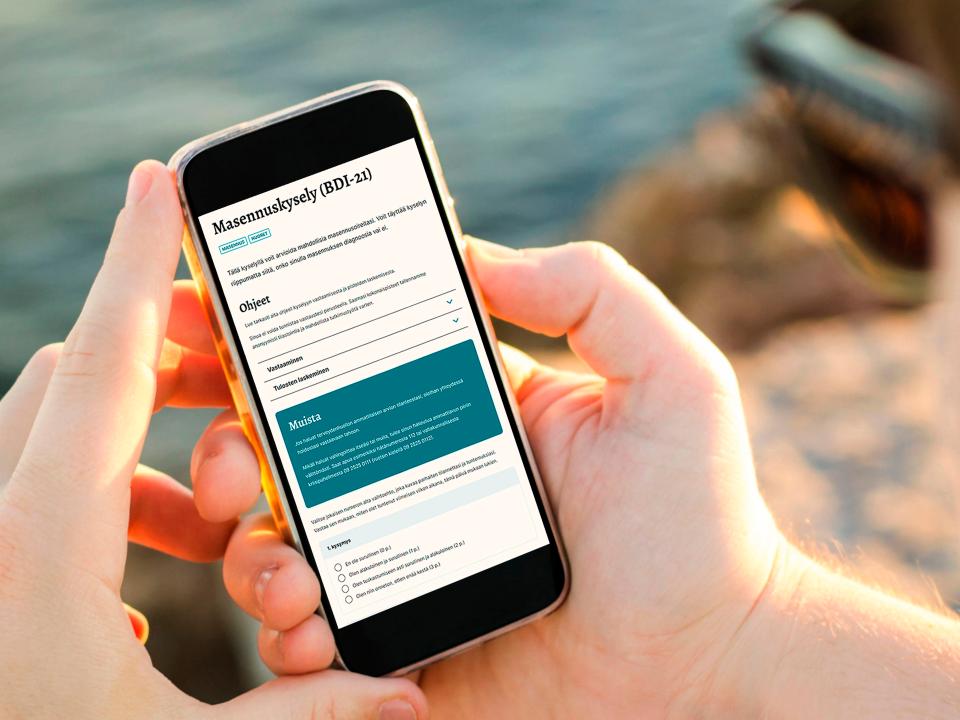
Symptom scales
With a symptom scale, you can assess the severity of your symptoms. You will also get tips from the results on what you should do next.
Self-help programs
Self-help programs help you improve your well-being when you are concerned about your mental health or have mild symptoms. The programs include information and exercises.

Internet Therapies
Mainly for ages 16 and up. You need a referral and online banking credentials.
Internet therapy is based on independent work online. A therapist specialized in your symptoms provides feedback on your exercises and answers questions that arise during them. You need a doctor’s referral for internet therapy.