Work Buddy activity scheme
Summary
- The Work Buddy activity scheme strengthens the sense of belonging in the workplace community and help prevent loneliness.
- This activity is suitable for all workplaces and all employees.
- A Work Buddy coordinator ensures that activities run smoothly and guides the participants.
- Work Buddy activities promote interaction between different teams, support onboarding of new employees and provide peer support for everyday work.
Work Buddy activities support getting to know people across team boundaries, assist with social onboarding and provide peer support in everyday working life.
Getting to know a colleague brings a sense of belonging and support to daily work.
Basic principles of the Buddy activities:
- Voluntary participaition: Participation in Work Buddy activity scheme is based on your own choice.
- Peer relationship: A buddy is a colleague, not a supervisor. They can also be from a different team or department.
- Personalization: Buddy pairs agree together how they will meet and when. A buddy meeting can be over lunch or coffee, or it can be a walk, or even an online meeting.
- Regularity: Meetings are held regularly. At the end of each meeting, it’s a good idea to agree on the next meeting time.
Who is the Work Buddy scheme for and how does it work?
The Work Buddy activity scheme is suitable for any workplace community that wants to:
- strengthen the sense of belonging at work
- ensure there is someone in the workplace that people can talk to about everyday challenges and successes
- encourage employees to get to know each other.
One or more coordinators are appointed to organize Work Buddy activities. Their task is to provide information about the activities and instruct the participants.
Additionally, coordinators help to create the formation of new buddy pairs each year, once a year.
When a new employee starts, the coordinator automatically offers them a buddy to support their social onboarding.
The Work Buddy coordinator’s role is to regularly remind buddy pairs about meetings and share current tips and ideas so that activities do not fall by the wayside due to busy work schedules.
Tips for a successful Work Buddy activity scheme
For workplaces
Commitment from management:
- Ensure that support from management and supervisors is visible.
- Management are able to communicate to the work community about the importance of the activity scheme.
Clear communication
- Inform all employees about the Work Buddy activity scheme (e.g., via intranet, email, team meetings).
- Emphasize the voluntary nature and benefits of the activity (sense of belonging, peer support, onboarding).
Securing resources
- Appoint one or more Work Buddy coordinators.
- Allocate time for coordinators to plan and monitor the activity.
Making the activity visible
- Publish Work Buddy pairs (with participants’ consent) and organize a launch event.
- Use visual tools such as posters or intranet banners.
Supporting community spirit
- Create opportunities for informal meetings (e.g., shared coffee breaks, lunches, walks).
- Encourage teams to organize joint activities for buddy pairs.
For Work Buddy coordinators
Starting the activity
- Assess interest in the work community towards the activity (e.g., via survey or sign-up form).
- Create the Work Buddy pairs, taking into consideration the employees’ preferences (e.g., different teams, roles, interests).
Guidance and support
Provide clear instructions to the buddy pairs:
- How does the activity start?
- How can meetings be arranged (e.g., coffee, lunch, virtual)?
Offer them examples of discussion topics (e.g., everyday challenges at work, successes, ideas for further development).
Regular follow-up
Send regular reminders, for example via a monthly reminder email or in team meetings. Collect feedback from participants every 3–6 months and include questions such as:
- How have the activities been going?
- What could be improved?
Onboarding new employees
- Automatically offer a buddy to every new employee.
- Introduce the Work Buddy activity scheme and the benefits of participating in the scheme during onboarding.
Developing the activity
Organize an annual feedback session:
- Gather ideas for improvement.
- Reward active participants, e.g., with a thank-you card or by being mentioned on the intranet.
- Update instructions as needed, for example when new employees join or changes occur.
Collaboration with occupational health
- Refer employees to occupational health if severe loneliness or other challenges are affecting their working ability.
- Utilize occupational health expertise in training or with materials on social well-being when needed.
An example of a Work Buddy meeting:
Introduction
- Briefly share a few things about yourself, e.g., your role in the workplace, tasks that you do, interests in the field.
Topic selection
- Decide together what to topic to discuss in the meeting (e.g., work challenges, ideas, tips for the workplace).
Discussion
- Listen actively and share your experiences.
Agree on the next meeting
- Decide when and how you will meet next.
Optional extra:
- You can create a Work Buddy rewards booklet. Participants record their meetings in the book and then after a certain number of meetings they receive a small reward, for example a voucher for coffee.
Read more
This content is part of the inclusive tools for a caring workplace. Find out more about our community engagement tools here:
You may also be interested in:
How MentalHub.fi can help
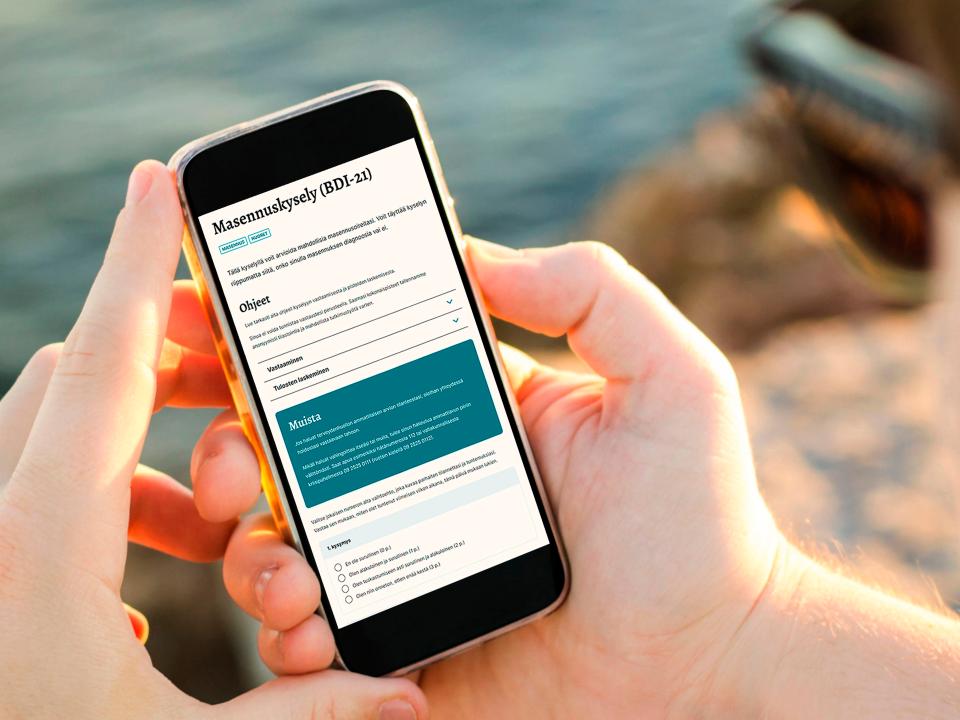
Symptom scales
With a symptom scale, you can assess the severity of your symptoms. You will also get tips from the results on what you should do next.
Self-help programs
Self-help programs help you improve your well-being when you are concerned about your mental health or have mild symptoms. The programs include information and exercises.

Internet Therapies
Mainly for ages 16 and up. You need a referral and online banking credentials.
Internet therapy is based on independent work online. A therapist specialized in your symptoms provides feedback on your exercises and answers questions that arise during them. You need a doctor’s referral for internet therapy.