Workshop - Community spirit in the workplace
About this workshop
It is recommended to use this workshop
- when the work community wants to strengthen belonging, interaction, and collaboration
- when signs of strain, fragmentation, or feelings of loneliness have been observed at work
- when the team’s dynamics need a shared direction and more functional structures
- when changes are happening in the organization
- when the work community transitions to a new work model, such as remote or hybrid work, or back to on-site work.
Duration
- 2–2.5 hours
Goal
- The goal of the workshop is to strengthen community spirit in the workplace by identifying and developing structures and practices that support inclusion.
Who is this for?
- Work communities, teams
Workshop materials
- Flip chart or use a wall where notes can be attached
- Post-it notes in different colors
- Markers and pens in various colors
Materials printable from the website
- Print this webpage as a guide if needed.
Workshop description
The workshop offers concrete ways to build a more inclusive and compassionate work environment, especially from the perspective of young and new employees.
The purpose of this open workshop is to pause and reflect on existing knowledge, meanings, and experiences. It is okay not to know and to seek information from colleagues, as well as to discover new ideas together.
The aim is not only to generate ideas but also to listen to and receive others’ experiences.
Special attention is given to the experiences of young and new employees, as research shows they experience workplace loneliness much more than others.
What can a workplace gain from this workshop?
This workshop provides the workplace community with an opportunity to:
- recognize workplace loneliness as a phenomenon
- increase understanding of experiences of workplace loneliness from different perspectives
- strengthen interaction and empathy amongst members of the workplace community
- identify practices and attitudes that may unintentionally maintain feelings of exclusion
- create concrete ideas and small interventions to increase the sense of belonging
- support well-being and commitment to the workplace.
Structure of the workshop:
1. Introduction and orientation (15 min)
- Welcome participants and explain the objectives of the workshop.
- Provide a short introduction on the impact of community on individual well-being and the functioning of the whole work community (ready-made text base).
- Remind participants: the workshop does not aim to solve everything at once. The most important thing is to listen to others and understand what supports community spirit and what small changes could be made.
2. Open exploration of ideas in groups (30 min)
- Divide participants into groups of 4-6 people, with participants from different teams or work groups as randomly as possible. For example, you could use the instruction "Split into three groups" and then number participants: one-two-three, one-two-three, ...
- Give each group some paper, post-it notes and pens.
- Ask participants to discuss the following questions and write down their answers:
"At what moments do you feel connected at work?"
"Do you feel lonely or isolated at work in some situations? In which situations?"
"Where does the sense of community already work? What supports it?"
"How do structures (e.g. meeting practices, communication, division of labour, physical space, hybrid work) influence your experiences?"
3. The Wall of Ideas (30 min)
Continue working in the same groups.
Objective: to highlight barriers and enablers to community.
- Have a flipchart or use a wall to put up sticky notes.
- Ask participants to discuss the following questions:
"What structures and practices prevent community?"
"What factors and practices enable community?"
"What ideas and aspirations do you have for strengthening the community?" - After the discussion, ask participants to write down things on paper/post-it notes individually or in groups and post them on the wall:
🔴 Structures and practices that hinder community.
🟢 Enablers or practices that enable community.
🔵 Ideas and aspirations for strengthening community.
Tip: You can use different coloured post-it notes or draw a symbol (🔴🟢🔵).
- Allow 10-15 minutes to write and attach the notes.
- At the end, ask everyone to go around the ideas wall and read each other's observations and, if they wish, add new notes to the wall of ideas.
4. Putting ideas into structures (30 min)
- Ask the groups to choose 1-2 themes or ideas from their outputs that they would like to develop further.
- Ask them to work on their own ideas using the following questions (e.g. show these to the group).
"What problem does this solve?"
"What could be a new or modified structure or method?"
"How would this benefit the work community?"
"How could this work in practice in everyday life?
Examples of structures that strengthen community:
- new weekly meetings
- shared breaks
- peer support
- mentoring program
Tip: Encourage more concrete and applied solutions– how could the idea be implemented in everyday life with even a small change?
5. Presentation of ideas and joint prioritisation (15 min)
- Ask each group to briefly present the idea they have developed (2-3 min per group is sufficient).
- Take a collective vote after all ideas have been heard:
Ask: "Which 1-3 ideas would be the most important to try out or implement?"
You can use sticker voting, electronic voting or hand voting.
Write the selected ideas visibly, for example on a flip chart, in slides, or in a shared document.
6. Follow-up (15 min)
- Together, for the selected ideas, go through the following questions (you can ask the whole group or assign responsibilities to groups):
"How will the experiment be put into practice?"
"Who or who will be responsible for taking the experiment forward?"
"How will we evaluate whether this worked? (e.g. feedback, observations)"
"When will we come back and evaluate the success of the experiment?"
Tip: Set a date now to look at the impact of the experiment together (e.g. 1-2 months from now)
7. Finally
- Thank everyone for their involvement and activity.
- Highlight that strengthening the community is an ongoing process. Together we have now taken an important step to strengthen our community.
Read more
This content is part of the inclusive tools for a caring workplace. Find out more about our community engagement tools here:
You may also be interested in:
How MentalHub.fi can help
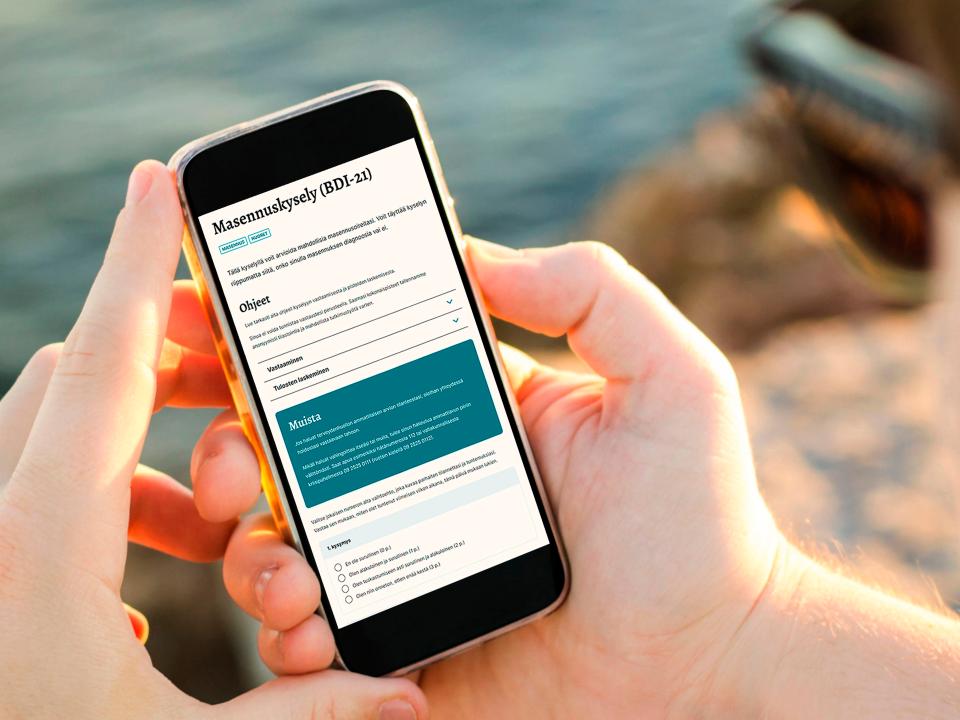
Symptom scales
With a symptom scale, you can assess the severity of your symptoms. You will also get tips from the results on what you should do next.
Self-help programs
Self-help programs help you improve your well-being when you are concerned about your mental health or have mild symptoms. The programs include information and exercises.

Internet Therapies
Mainly for ages 16 and up. You need a referral and online banking credentials.
Internet therapy is based on independent work online. A therapist specialized in your symptoms provides feedback on your exercises and answers questions that arise during them. You need a doctor’s referral for internet therapy.